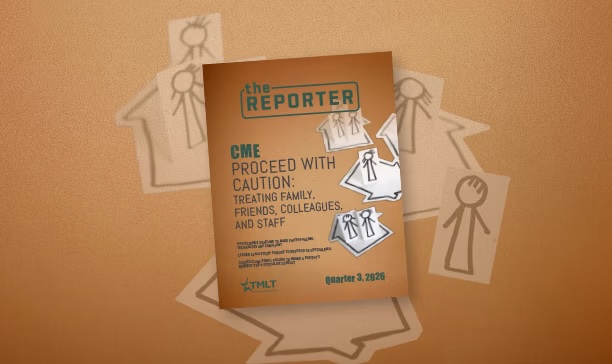
CME: Proceed with caution: Treating family, friends, colleagues, and staff
As physicians, we are often asked to provide medical care for the people in our lives who are not our traditional patients — family, friends, neighbors, employees, colleagues, or even ourselves. But there are real, inherent risks to consider with treating people we care about.

CME: Proceed with caution: Treating family, friends, colleagues, and staff
As physicians, we are often asked to provide medical care for the people in our lives who are not our traditional patients — family, friends, neighbors, employees, colleagues, or even ourselves. But there are real, inherent risks to consider with treating people we care about.
Objectives
Upon completion of this educational activity, the learner should be able to:
- comply with the rules and statutes related to treating or prescribing for family members or oneself;
- identify the risks that come with treating family members, friends, colleagues, or employees;
- discuss the legal and ethical implications of providing care when there is an “immediate need”; and
- examine the difficulties for physicians who act as caregivers for family members or loved ones.
Course authors
Brian S. Sayers MD is a rheumatologist in Austin, Texas. He is the founder of the Travis County Medical Society (TCMS) Physician Wellness and Safe Harbor Counseling Programs. He has served as chair of the TCMS Physician Health and Rehabilitation Program for the past decade.
Cathy Bryant is the Manager of Cyber Consulting Services at TMLT.
Disclosure
Brian S. Sayers MD and Cathy Bryant have no relevant financial relationship(s) with ineligible companies to disclose. TMLT staff, planners, and reviewers have no relevant financial relationship(s) with ineligible companies to disclose.
Target audience
This 1-hour activity is intended for physicians of all specialties who are interested in learning more about the rules and potential risks of treating patients with whom they have a special relationship, such as a family member, friend, colleague, or co-worker.
CME credit statement
Texas Medical Liability Trust is accredited by the Accreditation Council for Continuing Medical Education (ACCME) to provide continuing medical education for physicians.
Texas Medical Liability Trust designates this enduring material for a maximum of 1 AMA PRA Category 1 Credits™. Physicians should claim only the credit commensurate with the extent of their participation in the activity.
Ethics credit statement
This course has been designated by TMLT for 1 credit in medical ethics and/or professional responsibility.
How to get CME
To receive CME credit, readers must pass the online CME test with a 70% or better and complete the activity evaluation. A passing score earns the physician 1 CME credit.
Pricing
The following fee will be charged when accessing this CME course online at http://tmlt.inreachce.com.
Policyholders: $10
Non-policyholders: $75
Instructions
CME test and evaluation forms must be completed online. After reading the article, go to http://tmlt.inreachce.com. Log in using your myPortal account information to take the course. Follow the online instructions to complete the forms and download your certificate. To create a myPortal account, go to www.tmlt.org, click the log in button, and follow the on-screen instructions.
Release date
This activity is released on September 1, 2026, and will expire on September 1, 2029. Please note that this CME activity does not meet TMLT’s discount criteria. Physicians completing this CME activity will not receive a premium discount.
Introduction
Physicians are drawn to medicine to help people, to relieve suffering, to care for those around us. As physicians, we are often asked to provide medical care for the people in our lives who are not our traditional patients — family, friends, neighbors, employees, colleagues, or even ourselves.
These requests often occur outside of settings where care is usually provided — in hospital corridors, our own front yards, at social events, or through phone calls or text messages.
These “informal” requests can sometimes be out of the scope of a physician’s practice and involve people we care about. It can be difficult to maintain objectivity or be thorough when treating people from our personal lives. This can put everyone in jeopardy.
While we are all aware of the risks, heartfelt concern and a desire to help may draw a physician incrementally into a compromised physician-patient relationship that is not in anyone’s best interest.
The scope of care rendered can range from answering a question about symptoms to providing comprehensive care for a serious condition. Each scenario is unique, but all share something in common: the people with whom we have a pre-existing personal or professional relationship are not ordinary patients.
Closed claim study: Improper performance
The following closed claim illustrates how treating a staff member can lead to a medical malpractice lawsuit.
Presentation
An ob-gyn obtained additional training to perform gynecological cosmetic and reconstructive procedures, including breast augmentation. The physician’s long-time employee — a 49-year-old woman — told the ob-gyn that she wanted to be his first breast augmentation patient. The ob-gyn examined her, took her breast measurements, and provided her with information about breast implants.
The ob-gyn and his family were close to the employee and her family before this incident. In addition to the employment relationship, the families socialized together.
Physician action
Nine days later, the ob-gyn examined the patient again and completed the informed consent discussion with her for bilateral breast implants to be performed by the infra-mammary approach. The ob-gyn obtained a history and physical, documenting that the patient was healthy, but had an eating disorder and a history of mood dysfunction. The patient requested “total secrecy” for the procedure from the other employees in the office.
The breast augmentation was completed, as requested, on a Sunday in the ob-gyn’s office. Before the procedure the patient was given promethazine, clonidine, diazepam and acetaminophen. Only the ob-gyn and nursing staff had knowledge of the procedure. The procedure went well, and the patient was sent home with her husband. She was prescribed diazepam to assist with postoperative discomfort.
Twenty-four hours after the surgery, the patient’s husband called to report that his wife was experiencing shortness of breath. The ob-gyn sent his nurse to the patient’s home to assess her. The patient reported chest wall pain and had minimal dyspnea. The nurse examined the incisions and helped the patient take a bath. There was no documentation of this home visit or of the nurse's assessment.
Over the next several days there were frequent phone calls between the patient and the ob-gyn's nurse. The patient's shortness of breath was attributed to “panic attacks” by the ob-gyn and the patient's family.
On the fifth postoperative day, the patient was seen by the ob-gyn in the office. She continued to report shortness of breath and coughing. Her 02 saturation was recorded as 98 percent. On the ninth postoperative day, the patient continued reporting shortness of breath. A chest X-ray revealed a small pleural effusion with no pneumothorax or other lung problem. The patient returned to work 17 days after the procedure.
One day after returning to work, the patient was seen by a plastic surgeon in a neighboring town. The patient was dissatisfied with the appearance of her breasts and reported dyspnea on exertion. The plastic surgeon examined the patient and found no evidence of wound problems or infection. He ordered a chest X-ray that showed a 10 percent pneumothorax and fluid at the base of her lung.
The patient was referred to a pulmonologist. His diagnosis was a hemopneumothorax or a resolving pneumothorax with pleural effusion associated with atelectasis. The pulmonologist placed the patient on amoxicillin clavulanate for one week. When the patient returned, a chest X-ray showed reinflation of the pneumothorax, resolution of the pleural effusion, and resolution of the infiltrate.
The patient returned to the plastic surgeon and stated that she was unhappy with the appearance of her right breast. She also reported pain in the inferior crease of the right breast. The plastic surgeon described the right implant as having “tethering of the pectoralis muscle with the superior pole of the implant appearing to be under the pectoral muscle and the inferior pole to be pinched within the pectoral muscle.”
He told the patient that the implant could stay or he could perform a revision of both implants to the pectoral plane. The patient elected to have the revision surgery. During the procedure, the plastic surgeon released muscle tissue attached to the capsule holding the implant of the right breast.
Allegations
A lawsuit was filed against the ob-gyn, alleging that he caused the patient's pneumothorax and failed to recognize, diagnose, and properly treat the pneumothorax. The patient also alleged that he improperly placed the right implant and that he did not possess adequate knowledge, skill, training, and experience to perform breast augmentations.
Legal Implications
The plaintiff's plastic surgery expert was critical of the surgical and post-surgical care of the patient. He stated that the ob-gyn caused the pneumothorax during the procedure and failed to recognize it, which was below the standard of care. This expert was also critical of the ob-gyn's lack of training to perform breast augmentations.
The defense argued that a pneumothorax was a recognized complication that can and does occur without negligence. Shortness of breath is not an unusual symptom following breast augmentation surgery. When the patient's symptoms continued, the ob-gyn appropriately ordered a chest X-ray that did not identify a pneumothorax.
The defense expert — an ob-gyn who performs breast augmentation procedures in his office using the same anesthesia and procedures as the defendant — testified that the defendant was properly trained and qualified to perform breast augmentations. This was the ob-gyn's first breast augmentation procedure and it was performed on a Sunday in his office procedure room.
Disposition
This case was dismissed by the court before trial.
Risk management considerations
When initiating new procedures, those procedures should occur when and where adequate support is available even when attempting to honor a patient's request.
All patient-related contacts, including phone calls with patients or family members, home visits, and office visits should be documented in the medical record in a timely manner. Complete and accurate documentation ensures continuity of care, facilitates communication among the care team, and provides a record of clinical assessments.
Documentation and communication also creates opportunities to identify and address abnormal findings promptly. The results of the findings could then be used to determine next steps in the patient’s care, such as a physician examination or referral for diagnostic testing as clinically indicated.
This case demonstrates that anyone — even long-time employees and friends — will seek legal counsel when they believe they have been injured during treatment or surgery. Though this employee was eager to have the procedure and was well informed when she consented, she was dissatisfied with the result and filed suit against the ob-gyn.
Rules, regulations, and ethical guidelines
For physicians in Texas, Texas Medical Board (TMB) rules apply when providing medical care — including prescribing — for family, friends, employees, and colleagues.
Among the most commonly cited is Chapter 180, Subchapter A, Rule 180.1(L), Violation Guidelines:
“Inappropriate prescription of dangerous drugs or controlled substances to oneself, family members, or others in which there is a close personal relationship that would include the following:
- prescribing or administering dangerous drugs or controlled substances without taking an adequate history, performing a proper physical examination, and creating and maintaining adequate records; or
- prescribing controlled substances in the absence of immediate need. “Immediate need” shall be considered no more than 72 hours.” 1
Of note, the TMB defines “dangerous drugs” throughout their rules as any drug requiring a prescription.
TMB rules describing violations of the Medical Practice Act also apply.
“(A) failure to treat a patient according to the generally accepted standard of care;…
(G) failure to disclose reasonably foreseeable side effects of a procedure or treatment;
(H) failure to disclose reasonable alternative treatments to a proposed procedure or treatment;
(I) failure to obtain informed consent from the patient or other person authorized by law to consent to treatment on the patient's behalf before performing tests, treatments, procedures…;
(J) termination of patient care without providing reasonable notice to the patient.” 2
TMB rules remain the same for all patients — including your loved ones, employees, or yourself — with or without prescribing. The formal establishment of a physician-patient relationship — which includes obtaining a medical history and performing a physical exam — is part of the “generally accepted standard of care.” Additionally, complete, contemporaneous documentation is expected with all patient encounters.
While these elements are no less important when treating family members, they may be deficient or even absent when treating loved ones or other “informal” patients.
Of special note, resident physicians — whether working under a Physician in Training permit or a TMB license — are specifically forbidden from writing prescriptions for themselves or family members.
TMB disciplinary actions for physicians who violate these rules may depend on the severity of the violation and whether the physician has been subject to previous board actions.
(If you practice outside of Texas, please refer to your state medical board for more details and rules for practicing in your state.)
Rules from the U.S. Drug Enforcement Administration (DEA) state that, “A prescription for a controlled substance to be effective must be issued for a legitimate medical purpose by an individual practitioner acting in the usual course of his professional practice.” 3
The key clause in this general rule requires that the prescribing physician is “acting in the usual course of his professional practice.” There are many implications within this phrase, but it indicates that a physician-patient relationship has been established including full documentation of an appropriate history and physical exam and working within the usual framework and scope of the physician’s usual day-to-day practice. 3
DEA actions against violators may be administrative, civil, or criminal depending on the nature and severity of the violation.
The American Medical Association (AMA) Code of Medical Ethics states that:
“In general, physicians should not treat themselves or members of their own families. However, it may be acceptable to do so in limited circumstances:
a. In emergency settings or isolated settings where there is no other qualified physician available. In such situations, physicians should not hesitate to treat themselves or family members until another physician becomes available.
b. For short-term, minor problems.” 4
This section of the AMA Code of Medical Ethics further states that physicians in this setting should properly document treatment, recognize the adverse effect that a professional relationship might have on a personal, family relationship, and avoid providing sensitive or intimate care (especially for minors who might be uncomfortable being treated by a family member). It further warns that family members may be reluctant to state their preference to be seen by another practitioner. 4
Medicare rules (42 CFR § 411.12) prohibit payment for services usually covered under Medicare to physicians for services provided to immediate family or household members.5
Some professional and specialty organizations also offer guidance.
A Texas Medical Association (TMA) House of Delegates Resolution states:
“. . . treatment of self and family members for minor medical problems, including prescriptions for medications is not, in the absence of substantive and specific evidence to the contrary, a de facto deviation from the standard of care expected of a physician licensed to practice in the State of Texas.” 6
Similarly, the TMA Board of Counselors Current Opinion: Treatment of Family Members and Friends, states:
“One of the physician's primary duties is to alleviate suffering. Thus, it is ethical to treat family and friends in immediate need. In those circumstances medical records may not be relevant. The Board of Councilors cautions a physician treating his or her family or friends because of the potentially hazardous medical consequences. (Modified February 2007).” 6
The American College of Physicians has also issued a position statement. In part, it states:
“Physicians may want to provide care for themselves, or from time to time be asked to provide medical care to a family member or others with whom the physician has a close nonprofessional relationship or an employee or supervisor with whom there is a reporting relationship. Each of these situations raises clinical and professionalism concerns that should be considered.
Except in emergent circumstances when no other option exists, physicians ought not care for themselves. A physician cannot adequately interview, examine, or counsel herself or himself, without which ordering diagnostic tests, medications, or other treatments is ill-advised.
Regarding people with whom the physician has a significant preexisting, nonprofessional relationship, such as family members and close friends, and regarding employees or supervisors, the relationship necessarily adds another layer that may complicate what would become the professional patient–physician relationship.” 7
Proceed with caution
When individuals with whom you share special relationships are asking for care, carefully consider these consequences and potential hazards:
- loss of objectivity for both the physician and patient;
- absence of a comprehensive patient history and inability to perform an appropriate physical exam;
- inability to thoroughly document all aspects of care, as required;
- confidentiality issues;
- “patient” reluctance to fully disclose sensitive information or discomfort with intimate or sensitive physical exam;
- potentially compromising an important relationship;
- unintentionally creating an atmosphere that makes it difficult or awkward for the “patient” to change providers, get a second opinion, or advocate for themselves when they disagree with the diagnosis or treatment;
- potentially providing care that is beyond your scope of practice;
- the care may be unnecessary, potentially adding stress to an already strained professional and personal life;
- lack of or inability to follow-up;
- incomplete or absent patient education or informed consent;
- a tendency to over- or under- treat; and
- regulatory and medical liability issues.
Research indicates that treating and prescribing for self and others in a physician’s personal life is a common occurrence.
- A survey conducted in Ireland of more than 4,000 physicians found that two-thirds had prescribed for themselves; more than 70 percent had prescribed for family members; and almost 60 percent had prescribed for friends or colleagues. 8
- An analysis of 29 databases — including PubMed, PsychInfo, EBSCO, Medline, BioMed central and Science Direct — found 27 research studies had been conducted between 1990 and 2009 that demonstrated self-prescribing rates exceeded 50 percent in more than three quarters of the studies. 9
“Immediate need”
Medical board rules and ethical guidelines permit providing care and prescribing for oneself or family members under the following specific circumstances:
- medical care is not otherwise easily accessible; and
- a delay in treatment may worsen the condition or cause avoidable harm or suffering.
This is commonly referred to as providing care under “immediate need.”
As stated, the AMA Code of Medical Ethics notes that treatment of self or family members is acceptable “in emergency settings or isolated settings where there is no other qualified physician available. In such situations, physicians should not hesitate to treat themselves or family members until another physician becomes available.” 4
TMB rules specifically restrict “prescribing controlled substances in the absence of immediate need. ‘Immediate need’ shall be considered no more than 72 hours.” 10
Regardless of the urgency of the circumstances, TMB rules apply regarding the establishment of a physician-patient relationship and documentation of care.
Treating “minor” ailments
Most ethical guidelines include an exception for treating a “minor” symptom or problem. Yet, the definition of that word deserves scrutiny. Applying an over-the-counter antimicrobial ointment to a child’s skinned knee, prescribing mupirocin for a friend’s superficially infected mosquito bite, or recommending acetaminophen, rest, and fluids for a common cold may reasonably fall within this category.
What may not fall within this category — recommending an acid blocker for an in-law with atypical chest pain or suggesting a nutritional supplement for a neighbor with unexplained weight loss (particularly without ensuring they follow up with a specialist). These symptoms may point to something more serious, and your informal (and trusted) advice could delay treatment and follow up.
While common sense should prevail, it is good practice to pause briefly and consider whether a situation would be perceived as “minor” by a third party. When in doubt — especially with anyone outside of your immediate household — take extra care to document in real time and plan for follow up.
Treating family members and close friends
Perhaps the most common source of requests for medical care from special relationships comes from family members. A New England Journal of Medicine study revealed that:
- 99 percent of physicians surveyed reported receiving requests from family members for medical care, treatment, or advice;
- 83 percent had prescribed for a family member;
- 80 percent had diagnosed medical illnesses;
- 72 percent had performed physical exams;
- 15 percent had acted as primary attending physician during a hospitalization; and
- 9 percent had operated on a family member. 11
Interestingly, 22 percent said that they had “acceded to a specific request about which they felt uncomfortable.” 11
The treatment of close friends and romantic partners deserves equal consideration. Whether it is a friend or family member who approaches you for advice or care, the intimacy of the relationship is what matters and may drive treatment decisions.12
The ethical lines are perhaps most easily blurred when the physician is also the parent of the “patient.” Parental responsibility includes closely monitoring the physical and emotional health of one’s children. Parents, whether physicians or not, assess, diagnose, treat, or refer their children for medical conditions on a daily basis. These instincts, judgement calls, informal assessments, and decisions to seek professional care are no less appropriate when the parent is a physician.
However, the ethical line may be crossed when a physician parent moves beyond what any parent is able to do, such as applying their own clinical knowledge and training to decision making. This is especially obvious when medication is prescribed, as personal involvement may compromise objectivity.
In non-emergent situations, physicians should avoid adopting the role of treating physician for loved ones. Many adopt an “all or nothing” approach which sets a clear boundary between their role as loved one and their role as physician, a boundary that is maintained and understood by everyone involved.
This boundary does not mean becoming detached or aloof with loved ones. A physician can still pay close attention to a loved one’s health, show concern, help them get the care they need, or provide appropriate assistance in situations of immediate need. What the boundary does emphasize is that your primary role in their lives is a personal one. Trying to be both physician and loved one is ultimately in no one’s best interest.
Physician-caregiver for a family member
Physicians who serve as a personal caregiver for a spouse or close family member must examine the boundary issues that exist between being a loving family member, a caregiver, and a physician. The temptation to act as a physician — formally taking over medical care for their loved one with the loved one’s informed consent — can be strong. But keep in mind, the roles of caregiver and loving family member are equally important and necessary.
For example, caregiver functions or responsibilities typically include:
- offering emotional support, listening, and encouragement;
- providing for physical needs, focusing on activities of daily living (ADLs), such as bathing, dressing, and feeding;
- encouraging contact with appropriate members of the health care team when needed;
- helping to maintain medication compliance and prescriptions;
- supporting and encouraging the completion of physical activities;
- honoring the loved one’s independence and ultimate authority over their health care and daily activities;
- maintaining a loved one’s confidentiality regarding medical information, finances, physical privacy, and more; and
- assisting their loved one with carrying out recommendations found in their physicians’ care plan.
None of these caregiver duties include prescribing medication, making medical decisions, or advising deviation from the prescribed treatment plan. A good caregiver facilitates the independence and agency of their loved one and provides appropriate emotional and physical support.
If a physician has assumed any part of a loved one’s medical care, that care must be carefully and fully documented. This means complete and contemporaneous records — not informal notes or memory. It also means that the physician must fully discuss with the loved one the benefits and risks that come with this dual role.
If it becomes necessary to prescribe controlled substances, carefully consider obtaining and documenting input from other members of the care team. As mentioned above, physicians in Texas may not prescribe controlled substances to themselves, family members, or others in which there is a close personal relationship, for more than 72 hours.
Caregiving is difficult and can be emotionally and physically draining over extended periods of time. Physicians acting as caregivers often feel helpless or responsible when their loved one is suffering. Feelings of guilt, self-doubt, and compassion fatigue can become overwhelming.
Physicians who combine caregiving with the usual stressors of practicing medicine run the risk of compromising their own mental and physical well-being, their judgment in both roles, and their relationships with the people they love.
Treating yourself
We have all known colleagues who act as their own primary care physician. These physicians self-diagnose and treat their own acute and chronic conditions. Sometimes this self-care seems appropriate, other times it seems haphazard and ill conceived.
The reasons to avoid treating family members also apply to self-treatment. Within the setting of self-care, a physical exam may be difficult to perform. Documentation may be incomplete. As such, the basic medical-legal requirements of a physician-patient relationship are likely not achieved.
Except in cases of “immediate need,” regulatory agencies and professional organizations unanimously discourage self treatment. Self-prescribing controlled substances is specifically mentioned in DEA and TMB regulations as something to be avoided or limited to a 72-hour period or less with contemporaneous documentation.
In these situations, it is good practice to promptly report the incident and your self-care to another physician. This can help you assess the appropriateness of the care, determine the need for any longitudinal care, and serves to document and support your self-prescribing.
Treating employees
As the closed claim study illustrates, treating employees is especially complex. These requests — within the context of an employee-employer relationship — can represent a potential legal minefield. Consider the following tips when faced with an employee who requests medical care.
- Whenever possible, avoid becoming your employee’s physician. Be prepared to offer referrals to other trusted physicians.
- Consider adding a formal policy against physicians providing care to employees in your practice’s policy and procedure manual.
- If you are considering becoming your employee’s physician, carefully determine whether you can maintain the same objectivity and confidentiality that you would for any other patient.
- Carefully consider the effect that providing medical care for your employees will have on your important employee-employer relationship. This relationship will be irrevocably changed, and the change may not be for the better.
- When you agree to treat an employee, establish a tangible and fully documented physician-patient relationship that is identical to any other patient that you see within your practice.
- Make sure you are working within the scope of your daily practice. Again, be prepared to offer referrals to more appropriate specialists.
- Patient confidentiality is especially important in this setting. To the extent possible, keep your employee-patient’s medical record inaccessible to other practice employees.
- Encourage your employee-patients to transfer their long-term care to a different physician outside of the practice. Document these conversations/referrals.
Treating colleagues
As with employees, most of us will be asked to provide care for a physician colleague. Yet as physicians, we are not always the best patients. In a survey of physicians who treated other physicians, 52 percent reported that their physician-patient tried to dictate their own care, and 81 percent reported that their physician-patients tried to obtain special privileges in their care. This temptation for physician-patients to care for themselves or to drive their own care can complicate treatment.13
In these scenarios, the following issues should be recognized and addressed from the outset.
- Maintain proper boundaries between personal and professional relationships.
- Do not make assumptions about the physician-patient’s medical knowledge or past health behavior.
- Recognize that treating colleagues can provoke anxiety and may cause the treating physician to provide care differently than is their routine. 14, 15
Consider the following recommendations when treating colleagues.
- Carefully consider your ability to provide objective, confident care for a close colleague.
- Avoid “corridor consultations” or “curbside consults” (informal clinical conversations with colleagues asking for quick advice or an opinion).
- Engage in an honest conversation — at your first appointment — with a physician-patient about the importance of maintaining a typical physician-patient relationship.
- Follow all confidentiality guidelines.
- Allow for shared decision making, but once a treatment plan is established make your expectation clear that the physician-patient will not self-treat and will adhere to the mutually agreed upon plan.
- Avoid ordering tests that you would not normally order for patients with the same health issues.
- Obtain a complete history and perform a thorough physical exam. Take a full social history, including alcohol or substance use, high risk behavior, and any history of self-treatment.
- Recognize that treating a colleague or other physician can be stress-provoking.16
While caring for another physician or colleague can be challenging, it can also be extremely rewarding. As physicians, we too deserve excellent medical care from the physicians of our choice.
Risk management strategies
At some time during their careers, most physicians will face decisions about whether to treat a family member, friend, or employee. Thinking through the issues described below and establishing your own personal guidelines can help make these situations easier to manage.
- Will I be working within the same scope of practice as my usual daily practice?
- Will I be treating this person in my usual practice setting (office, ED, etc.)?
- Can I be as objective as I would be with any other patient?
- Will I fully document the care, including having them fill out usual new patient forms, documenting history and physical, shared decision making, and fully documenting treatment undertaken?
- Will I be providing longitudinal care or making concrete arrangements for it?
- Will I be able to take a complete history and perform all necessary components of a physical exam?
- Can I guarantee confidentiality? This includes not discussing care with other family members without obtaining consent from the patient.
- Will I obtain legitimate and specific informed consent?
- Will treating this patient adversely affect our personal or professional relationship?
- Would I feel confident if the details of the care provided to a patient with a special relationship were reviewed by a colleague, medical board, or peer review panel?
- Have I explored and offered other care options with my loved one/colleague before and during ongoing care?
- If prescribing controlled substances, have I carefully considered DEA and medical board rules, ethical issues, and potential ramifications?
- Requests for informal or curbside medical advice about a health condition, even when responded to with a very basic answer or advice but no actual treatment, should prompt dated, contemporaneous documentation of the encounter.
Sources
- Texas Administrative Code, Title 22, Part 9. Texas Medical Board, Violation Guidelines, Section 180.1(1)(L). Violation Guidelines. Available at https://texas-sos.appianportalsgov.com/rules-and-meetings?$locale=en_US&interface=VIEW_TAC_SUMMARY&queryAsDate=06%2F18%2F2026&recordId=223523. Accessed June 22, 2026.
- Texas Administrative Code, Title 22, Part 9. Texas Medical Board, Violation Guidelines, Section 180.1(1)(A-J). Violation Guidelines. https://texas-sos.appianportalsgov.com/rules-and-meetings?$locale=en_US&interface=VIEW_TAC_SUMMARY&queryAsDate=06%2F17%2F2026&recordId=223523. Accessed June 22, 2026.
- Code of Federal Regulations, Title 21-Food and Drugs, Chapter II- Drug Enforcement Administration, Department of Justice, Part 1306- Prescriptions, 1306.04(a) Purpose of issue of prescriptions. Available at https://www.ecfr.gov/current/title-21/chapter-II/part-1306. Accessed June 22, 2026.
- American Medical Association Code of Medical Ethics. Opinion 1.2.1. Treating Self of Family. 2026. Available at https://code-medical-ethics.ama-assn.org/ethics-opinions/treating-self-or-family. Accessed June 22, 2026.
- Code of Federal Regulations 42 411.12. Charges imposed by an immediate relative or member of the beneficiary’s household. 2011. Available at https://www.govinfo.gov/content/pkg/CFR-2011-title42-vol2/pdf/CFR-2011-title42-vol2-part411-subpartA.pdf. Accessed June 22, 2026.
- Texas Medical Association House of Delegates Resolution 108 (A-07), “Physician Prescribing to Self and Family Members.” Last updated on July 24, 2025. Available at https://www.texmed.org/Template.aspx?id=5761. Accessed June 22, 2026.
- Sulmasy LS, Bledsoe TA. American College of Physician’s Manual, Seventh Edition, Annals of Internal Medicine, Vol. 170, number 2 supplement. January 15, 2019. Available at https://www.acpjournals.org/doi/10.7326/M18-2160. Accessed June 22, 2026.
- Hartnett Y, Drakeford C, Dunne L, et. al. Physician, heal thyself: a cross-sectional survey of doctors’ personal prescribing habits. J Med Ethics. 2020 Apr ;46(4):231-235. doi:10.1136/medethics-2018-105064. Available at https://pubmed.ncbi.nlm.nih.gov/31796545/. Accessed June 22, 2026.
- Montgomery AJ, Bradley C, Rochfort A, Panagopoulou E. A review of self-medication in physicians and medical students. Occup Med (Lond). 2011;61(7):490-497. doi:10.1093/occmed/kqr098. Available at https://pubmed.ncbi.nlm.nih.gov/21727179/. Accessed June 22, 2026.
- Texas Administrative Code, Title 22, Part 9. Texas Medical Board, Violation Guidelines, Section 180.1(1)(L)(ii). Available at https://texas-sos.appianportalsgov.com/rules-and-meetings?$locale=en_US&interface=VIEW_TAC_SUMMARY&queryAsDate=06%2F18%2F2026&recordId=223523. Accessed June 22, 2026.
- La Puma JL, Stocking CB, LaVoie D, Darling CA. When physicians treat members of their own families. Practices in a community hospital. N Engl J Med. 1991;325(18):1290-1294. doi:10.1056/NEJM199110313251806. Available at https://pubmed.ncbi.nlm.nih.gov/1922224/. Accessed June 22, 2026.
- Vijayalakshmi S, Ramkumar S, Rajsri TR, et al. A Doctor in the House, An Ethical Consideration on Treating Their Family Members: A Mixed-Method Study. Cureus. 2023; 15(8): e44230. Published 2023 Aug 27. DOI 10.7759/cureus.44230. Available at https://pmc.ncbi.nlm.nih.gov/articles/PMC10523028/. Accessed June 22, 2026.
- Avinger AM, McClary BS, Dixon M, et. al. Evaluation of standard of care practices among physicians who treat other physicians: A qualitative study. JAMA Network Open. 2022;5(10):e2236914. doi:10.1001/jamanetworkopen.2022.36914. Available at https://jamanetwork.com/journals/jamanetworkopen/fullarticle/2797454. Accessed June 22, 2026.
- Domeyer-Klenske A, Rosenbaum M. When doctor becomes patient: Challenges and strategies in caring for physician-patients. Fam Med. 2012; 44(7):471-7. Available at https://pubmed.ncbi.nlm.nih.gov/22791531/. Accessed June 22, 2026.
- Hutton CJ, Kay M, Round P, Barton C. "Do they think I'm good enough?": General practitioners' experiences when treating doctor-patients. BMC Prim Care. 2024;25(1):340. Published 2024 Sep 16. doi:10.1186/s12875-024-02592-1. Available at https://pmc.ncbi.nlm.nih.gov/articles/PMC11406865/. Accessed June 22, 2026.
- Hutton CJ, Kay M AM, Round P, Barton C. Doctors' experiences when treating doctor-patients: a scoping review. BJGP Open. 2023;7(4):BJGPO.2023.0090. Published 2023 Dec 19. doi:10.3399/BJGPO.2023.0090. Available at https://pubmed.ncbi.nlm.nih.gov/37479247/. Accessed June 22, 2026.
Brian Sayers MD can be reached at briansayers24@gmail.com.
Disclaimer
Objectives
Upon completion of this educational activity, the learner should be able to:
- comply with the rules and statutes related to treating or prescribing for family members or oneself;
- identify the risks that come with treating family members, friends, colleagues, or employees;
- discuss the legal and ethical implications of providing care when there is an “immediate need”; and
- examine the difficulties for physicians who act as caregivers for family members or loved ones.
Course authors
Brian S. Sayers MD is a rheumatologist in Austin, Texas. He is the founder of the Travis County Medical Society (TCMS) Physician Wellness and Safe Harbor Counseling Programs. He has served as chair of the TCMS Physician Health and Rehabilitation Program for the past decade.
Cathy Bryant is the Manager of Cyber Consulting Services at TMLT.
Disclosure
Brian S. Sayers MD and Cathy Bryant have no relevant financial relationship(s) with ineligible companies to disclose. TMLT staff, planners, and reviewers have no relevant financial relationship(s) with ineligible companies to disclose.
Target audience
This 1-hour activity is intended for physicians of all specialties who are interested in learning more about the rules and potential risks of treating patients with whom they have a special relationship, such as a family member, friend, colleague, or co-worker.
CME credit statement
Texas Medical Liability Trust is accredited by the Accreditation Council for Continuing Medical Education (ACCME) to provide continuing medical education for physicians.
Texas Medical Liability Trust designates this enduring material for a maximum of 1 AMA PRA Category 1 Credits™. Physicians should claim only the credit commensurate with the extent of their participation in the activity.
Ethics credit statement
This course has been designated by TMLT for 1 credit in medical ethics and/or professional responsibility.
How to get CME
To receive CME credit, readers must pass the online CME test with a 70% or better and complete the activity evaluation. A passing score earns the physician 1 CME credit.
Pricing
The following fee will be charged when accessing this CME course online at http://tmlt.inreachce.com.
Policyholders: $10
Non-policyholders: $75
Instructions
CME test and evaluation forms must be completed online. After reading the article, go to http://tmlt.inreachce.com. Log in using your myPortal account information to take the course. Follow the online instructions to complete the forms and download your certificate. To create a myPortal account, go to www.tmlt.org, click the log in button, and follow the on-screen instructions.
Release date
This activity is released on September 1, 2026, and will expire on September 1, 2029. Please note that this CME activity does not meet TMLT’s discount criteria. Physicians completing this CME activity will not receive a premium discount.
Introduction
Physicians are drawn to medicine to help people, to relieve suffering, to care for those around us. As physicians, we are often asked to provide medical care for the people in our lives who are not our traditional patients — family, friends, neighbors, employees, colleagues, or even ourselves.
These requests often occur outside of settings where care is usually provided — in hospital corridors, our own front yards, at social events, or through phone calls or text messages.
These “informal” requests can sometimes be out of the scope of a physician’s practice and involve people we care about. It can be difficult to maintain objectivity or be thorough when treating people from our personal lives. This can put everyone in jeopardy.
While we are all aware of the risks, heartfelt concern and a desire to help may draw a physician incrementally into a compromised physician-patient relationship that is not in anyone’s best interest.
The scope of care rendered can range from answering a question about symptoms to providing comprehensive care for a serious condition. Each scenario is unique, but all share something in common: the people with whom we have a pre-existing personal or professional relationship are not ordinary patients.
Closed claim study: Improper performance
The following closed claim illustrates how treating a staff member can lead to a medical malpractice lawsuit.
Presentation
An ob-gyn obtained additional training to perform gynecological cosmetic and reconstructive procedures, including breast augmentation. The physician’s long-time employee — a 49-year-old woman — told the ob-gyn that she wanted to be his first breast augmentation patient. The ob-gyn examined her, took her breast measurements, and provided her with information about breast implants.
The ob-gyn and his family were close to the employee and her family before this incident. In addition to the employment relationship, the families socialized together.
Physician action
Nine days later, the ob-gyn examined the patient again and completed the informed consent discussion with her for bilateral breast implants to be performed by the infra-mammary approach. The ob-gyn obtained a history and physical, documenting that the patient was healthy, but had an eating disorder and a history of mood dysfunction. The patient requested “total secrecy” for the procedure from the other employees in the office.
The breast augmentation was completed, as requested, on a Sunday in the ob-gyn’s office. Before the procedure the patient was given promethazine, clonidine, diazepam and acetaminophen. Only the ob-gyn and nursing staff had knowledge of the procedure. The procedure went well, and the patient was sent home with her husband. She was prescribed diazepam to assist with postoperative discomfort.
Twenty-four hours after the surgery, the patient’s husband called to report that his wife was experiencing shortness of breath. The ob-gyn sent his nurse to the patient’s home to assess her. The patient reported chest wall pain and had minimal dyspnea. The nurse examined the incisions and helped the patient take a bath. There was no documentation of this home visit or of the nurse's assessment.
Over the next several days there were frequent phone calls between the patient and the ob-gyn's nurse. The patient's shortness of breath was attributed to “panic attacks” by the ob-gyn and the patient's family.
On the fifth postoperative day, the patient was seen by the ob-gyn in the office. She continued to report shortness of breath and coughing. Her 02 saturation was recorded as 98 percent. On the ninth postoperative day, the patient continued reporting shortness of breath. A chest X-ray revealed a small pleural effusion with no pneumothorax or other lung problem. The patient returned to work 17 days after the procedure.
One day after returning to work, the patient was seen by a plastic surgeon in a neighboring town. The patient was dissatisfied with the appearance of her breasts and reported dyspnea on exertion. The plastic surgeon examined the patient and found no evidence of wound problems or infection. He ordered a chest X-ray that showed a 10 percent pneumothorax and fluid at the base of her lung.
The patient was referred to a pulmonologist. His diagnosis was a hemopneumothorax or a resolving pneumothorax with pleural effusion associated with atelectasis. The pulmonologist placed the patient on amoxicillin clavulanate for one week. When the patient returned, a chest X-ray showed reinflation of the pneumothorax, resolution of the pleural effusion, and resolution of the infiltrate.
The patient returned to the plastic surgeon and stated that she was unhappy with the appearance of her right breast. She also reported pain in the inferior crease of the right breast. The plastic surgeon described the right implant as having “tethering of the pectoralis muscle with the superior pole of the implant appearing to be under the pectoral muscle and the inferior pole to be pinched within the pectoral muscle.”
He told the patient that the implant could stay or he could perform a revision of both implants to the pectoral plane. The patient elected to have the revision surgery. During the procedure, the plastic surgeon released muscle tissue attached to the capsule holding the implant of the right breast.
Allegations
A lawsuit was filed against the ob-gyn, alleging that he caused the patient's pneumothorax and failed to recognize, diagnose, and properly treat the pneumothorax. The patient also alleged that he improperly placed the right implant and that he did not possess adequate knowledge, skill, training, and experience to perform breast augmentations.
Legal Implications
The plaintiff's plastic surgery expert was critical of the surgical and post-surgical care of the patient. He stated that the ob-gyn caused the pneumothorax during the procedure and failed to recognize it, which was below the standard of care. This expert was also critical of the ob-gyn's lack of training to perform breast augmentations.
The defense argued that a pneumothorax was a recognized complication that can and does occur without negligence. Shortness of breath is not an unusual symptom following breast augmentation surgery. When the patient's symptoms continued, the ob-gyn appropriately ordered a chest X-ray that did not identify a pneumothorax.
The defense expert — an ob-gyn who performs breast augmentation procedures in his office using the same anesthesia and procedures as the defendant — testified that the defendant was properly trained and qualified to perform breast augmentations. This was the ob-gyn's first breast augmentation procedure and it was performed on a Sunday in his office procedure room.
Disposition
This case was dismissed by the court before trial.
Risk management considerations
When initiating new procedures, those procedures should occur when and where adequate support is available even when attempting to honor a patient's request.
All patient-related contacts, including phone calls with patients or family members, home visits, and office visits should be documented in the medical record in a timely manner. Complete and accurate documentation ensures continuity of care, facilitates communication among the care team, and provides a record of clinical assessments.
Documentation and communication also creates opportunities to identify and address abnormal findings promptly. The results of the findings could then be used to determine next steps in the patient’s care, such as a physician examination or referral for diagnostic testing as clinically indicated.
This case demonstrates that anyone — even long-time employees and friends — will seek legal counsel when they believe they have been injured during treatment or surgery. Though this employee was eager to have the procedure and was well informed when she consented, she was dissatisfied with the result and filed suit against the ob-gyn.
Rules, regulations, and ethical guidelines
For physicians in Texas, Texas Medical Board (TMB) rules apply when providing medical care — including prescribing — for family, friends, employees, and colleagues.
Among the most commonly cited is Chapter 180, Subchapter A, Rule 180.1(L), Violation Guidelines:
“Inappropriate prescription of dangerous drugs or controlled substances to oneself, family members, or others in which there is a close personal relationship that would include the following:
- prescribing or administering dangerous drugs or controlled substances without taking an adequate history, performing a proper physical examination, and creating and maintaining adequate records; or
- prescribing controlled substances in the absence of immediate need. “Immediate need” shall be considered no more than 72 hours.” 1
Of note, the TMB defines “dangerous drugs” throughout their rules as any drug requiring a prescription.
TMB rules describing violations of the Medical Practice Act also apply.
“(A) failure to treat a patient according to the generally accepted standard of care;…
(G) failure to disclose reasonably foreseeable side effects of a procedure or treatment;
(H) failure to disclose reasonable alternative treatments to a proposed procedure or treatment;
(I) failure to obtain informed consent from the patient or other person authorized by law to consent to treatment on the patient's behalf before performing tests, treatments, procedures…;
(J) termination of patient care without providing reasonable notice to the patient.” 2
TMB rules remain the same for all patients — including your loved ones, employees, or yourself — with or without prescribing. The formal establishment of a physician-patient relationship — which includes obtaining a medical history and performing a physical exam — is part of the “generally accepted standard of care.” Additionally, complete, contemporaneous documentation is expected with all patient encounters.
While these elements are no less important when treating family members, they may be deficient or even absent when treating loved ones or other “informal” patients.
Of special note, resident physicians — whether working under a Physician in Training permit or a TMB license — are specifically forbidden from writing prescriptions for themselves or family members.
TMB disciplinary actions for physicians who violate these rules may depend on the severity of the violation and whether the physician has been subject to previous board actions.
(If you practice outside of Texas, please refer to your state medical board for more details and rules for practicing in your state.)
Rules from the U.S. Drug Enforcement Administration (DEA) state that, “A prescription for a controlled substance to be effective must be issued for a legitimate medical purpose by an individual practitioner acting in the usual course of his professional practice.” 3
The key clause in this general rule requires that the prescribing physician is “acting in the usual course of his professional practice.” There are many implications within this phrase, but it indicates that a physician-patient relationship has been established including full documentation of an appropriate history and physical exam and working within the usual framework and scope of the physician’s usual day-to-day practice. 3
DEA actions against violators may be administrative, civil, or criminal depending on the nature and severity of the violation.
The American Medical Association (AMA) Code of Medical Ethics states that:
“In general, physicians should not treat themselves or members of their own families. However, it may be acceptable to do so in limited circumstances:
a. In emergency settings or isolated settings where there is no other qualified physician available. In such situations, physicians should not hesitate to treat themselves or family members until another physician becomes available.
b. For short-term, minor problems.” 4
This section of the AMA Code of Medical Ethics further states that physicians in this setting should properly document treatment, recognize the adverse effect that a professional relationship might have on a personal, family relationship, and avoid providing sensitive or intimate care (especially for minors who might be uncomfortable being treated by a family member). It further warns that family members may be reluctant to state their preference to be seen by another practitioner. 4
Medicare rules (42 CFR § 411.12) prohibit payment for services usually covered under Medicare to physicians for services provided to immediate family or household members.5
Some professional and specialty organizations also offer guidance.
A Texas Medical Association (TMA) House of Delegates Resolution states:
“. . . treatment of self and family members for minor medical problems, including prescriptions for medications is not, in the absence of substantive and specific evidence to the contrary, a de facto deviation from the standard of care expected of a physician licensed to practice in the State of Texas.” 6
Similarly, the TMA Board of Counselors Current Opinion: Treatment of Family Members and Friends, states:
“One of the physician's primary duties is to alleviate suffering. Thus, it is ethical to treat family and friends in immediate need. In those circumstances medical records may not be relevant. The Board of Councilors cautions a physician treating his or her family or friends because of the potentially hazardous medical consequences. (Modified February 2007).” 6
The American College of Physicians has also issued a position statement. In part, it states:
“Physicians may want to provide care for themselves, or from time to time be asked to provide medical care to a family member or others with whom the physician has a close nonprofessional relationship or an employee or supervisor with whom there is a reporting relationship. Each of these situations raises clinical and professionalism concerns that should be considered.
Except in emergent circumstances when no other option exists, physicians ought not care for themselves. A physician cannot adequately interview, examine, or counsel herself or himself, without which ordering diagnostic tests, medications, or other treatments is ill-advised.
Regarding people with whom the physician has a significant preexisting, nonprofessional relationship, such as family members and close friends, and regarding employees or supervisors, the relationship necessarily adds another layer that may complicate what would become the professional patient–physician relationship.” 7
Proceed with caution
When individuals with whom you share special relationships are asking for care, carefully consider these consequences and potential hazards:
- loss of objectivity for both the physician and patient;
- absence of a comprehensive patient history and inability to perform an appropriate physical exam;
- inability to thoroughly document all aspects of care, as required;
- confidentiality issues;
- “patient” reluctance to fully disclose sensitive information or discomfort with intimate or sensitive physical exam;
- potentially compromising an important relationship;
- unintentionally creating an atmosphere that makes it difficult or awkward for the “patient” to change providers, get a second opinion, or advocate for themselves when they disagree with the diagnosis or treatment;
- potentially providing care that is beyond your scope of practice;
- the care may be unnecessary, potentially adding stress to an already strained professional and personal life;
- lack of or inability to follow-up;
- incomplete or absent patient education or informed consent;
- a tendency to over- or under- treat; and
- regulatory and medical liability issues.
Research indicates that treating and prescribing for self and others in a physician’s personal life is a common occurrence.
- A survey conducted in Ireland of more than 4,000 physicians found that two-thirds had prescribed for themselves; more than 70 percent had prescribed for family members; and almost 60 percent had prescribed for friends or colleagues. 8
- An analysis of 29 databases — including PubMed, PsychInfo, EBSCO, Medline, BioMed central and Science Direct — found 27 research studies had been conducted between 1990 and 2009 that demonstrated self-prescribing rates exceeded 50 percent in more than three quarters of the studies. 9
“Immediate need”
Medical board rules and ethical guidelines permit providing care and prescribing for oneself or family members under the following specific circumstances:
- medical care is not otherwise easily accessible; and
- a delay in treatment may worsen the condition or cause avoidable harm or suffering.
This is commonly referred to as providing care under “immediate need.”
As stated, the AMA Code of Medical Ethics notes that treatment of self or family members is acceptable “in emergency settings or isolated settings where there is no other qualified physician available. In such situations, physicians should not hesitate to treat themselves or family members until another physician becomes available.” 4
TMB rules specifically restrict “prescribing controlled substances in the absence of immediate need. ‘Immediate need’ shall be considered no more than 72 hours.” 10
Regardless of the urgency of the circumstances, TMB rules apply regarding the establishment of a physician-patient relationship and documentation of care.
Treating “minor” ailments
Most ethical guidelines include an exception for treating a “minor” symptom or problem. Yet, the definition of that word deserves scrutiny. Applying an over-the-counter antimicrobial ointment to a child’s skinned knee, prescribing mupirocin for a friend’s superficially infected mosquito bite, or recommending acetaminophen, rest, and fluids for a common cold may reasonably fall within this category.
What may not fall within this category — recommending an acid blocker for an in-law with atypical chest pain or suggesting a nutritional supplement for a neighbor with unexplained weight loss (particularly without ensuring they follow up with a specialist). These symptoms may point to something more serious, and your informal (and trusted) advice could delay treatment and follow up.
While common sense should prevail, it is good practice to pause briefly and consider whether a situation would be perceived as “minor” by a third party. When in doubt — especially with anyone outside of your immediate household — take extra care to document in real time and plan for follow up.
Treating family members and close friends
Perhaps the most common source of requests for medical care from special relationships comes from family members. A New England Journal of Medicine study revealed that:
- 99 percent of physicians surveyed reported receiving requests from family members for medical care, treatment, or advice;
- 83 percent had prescribed for a family member;
- 80 percent had diagnosed medical illnesses;
- 72 percent had performed physical exams;
- 15 percent had acted as primary attending physician during a hospitalization; and
- 9 percent had operated on a family member. 11
Interestingly, 22 percent said that they had “acceded to a specific request about which they felt uncomfortable.” 11
The treatment of close friends and romantic partners deserves equal consideration. Whether it is a friend or family member who approaches you for advice or care, the intimacy of the relationship is what matters and may drive treatment decisions.12
The ethical lines are perhaps most easily blurred when the physician is also the parent of the “patient.” Parental responsibility includes closely monitoring the physical and emotional health of one’s children. Parents, whether physicians or not, assess, diagnose, treat, or refer their children for medical conditions on a daily basis. These instincts, judgement calls, informal assessments, and decisions to seek professional care are no less appropriate when the parent is a physician.
However, the ethical line may be crossed when a physician parent moves beyond what any parent is able to do, such as applying their own clinical knowledge and training to decision making. This is especially obvious when medication is prescribed, as personal involvement may compromise objectivity.
In non-emergent situations, physicians should avoid adopting the role of treating physician for loved ones. Many adopt an “all or nothing” approach which sets a clear boundary between their role as loved one and their role as physician, a boundary that is maintained and understood by everyone involved.
This boundary does not mean becoming detached or aloof with loved ones. A physician can still pay close attention to a loved one’s health, show concern, help them get the care they need, or provide appropriate assistance in situations of immediate need. What the boundary does emphasize is that your primary role in their lives is a personal one. Trying to be both physician and loved one is ultimately in no one’s best interest.
Physician-caregiver for a family member
Physicians who serve as a personal caregiver for a spouse or close family member must examine the boundary issues that exist between being a loving family member, a caregiver, and a physician. The temptation to act as a physician — formally taking over medical care for their loved one with the loved one’s informed consent — can be strong. But keep in mind, the roles of caregiver and loving family member are equally important and necessary.
For example, caregiver functions or responsibilities typically include:
- offering emotional support, listening, and encouragement;
- providing for physical needs, focusing on activities of daily living (ADLs), such as bathing, dressing, and feeding;
- encouraging contact with appropriate members of the health care team when needed;
- helping to maintain medication compliance and prescriptions;
- supporting and encouraging the completion of physical activities;
- honoring the loved one’s independence and ultimate authority over their health care and daily activities;
- maintaining a loved one’s confidentiality regarding medical information, finances, physical privacy, and more; and
- assisting their loved one with carrying out recommendations found in their physicians’ care plan.
None of these caregiver duties include prescribing medication, making medical decisions, or advising deviation from the prescribed treatment plan. A good caregiver facilitates the independence and agency of their loved one and provides appropriate emotional and physical support.
If a physician has assumed any part of a loved one’s medical care, that care must be carefully and fully documented. This means complete and contemporaneous records — not informal notes or memory. It also means that the physician must fully discuss with the loved one the benefits and risks that come with this dual role.
If it becomes necessary to prescribe controlled substances, carefully consider obtaining and documenting input from other members of the care team. As mentioned above, physicians in Texas may not prescribe controlled substances to themselves, family members, or others in which there is a close personal relationship, for more than 72 hours.
Caregiving is difficult and can be emotionally and physically draining over extended periods of time. Physicians acting as caregivers often feel helpless or responsible when their loved one is suffering. Feelings of guilt, self-doubt, and compassion fatigue can become overwhelming.
Physicians who combine caregiving with the usual stressors of practicing medicine run the risk of compromising their own mental and physical well-being, their judgment in both roles, and their relationships with the people they love.
Treating yourself
We have all known colleagues who act as their own primary care physician. These physicians self-diagnose and treat their own acute and chronic conditions. Sometimes this self-care seems appropriate, other times it seems haphazard and ill conceived.
The reasons to avoid treating family members also apply to self-treatment. Within the setting of self-care, a physical exam may be difficult to perform. Documentation may be incomplete. As such, the basic medical-legal requirements of a physician-patient relationship are likely not achieved.
Except in cases of “immediate need,” regulatory agencies and professional organizations unanimously discourage self treatment. Self-prescribing controlled substances is specifically mentioned in DEA and TMB regulations as something to be avoided or limited to a 72-hour period or less with contemporaneous documentation.
In these situations, it is good practice to promptly report the incident and your self-care to another physician. This can help you assess the appropriateness of the care, determine the need for any longitudinal care, and serves to document and support your self-prescribing.
Treating employees
As the closed claim study illustrates, treating employees is especially complex. These requests — within the context of an employee-employer relationship — can represent a potential legal minefield. Consider the following tips when faced with an employee who requests medical care.
- Whenever possible, avoid becoming your employee’s physician. Be prepared to offer referrals to other trusted physicians.
- Consider adding a formal policy against physicians providing care to employees in your practice’s policy and procedure manual.
- If you are considering becoming your employee’s physician, carefully determine whether you can maintain the same objectivity and confidentiality that you would for any other patient.
- Carefully consider the effect that providing medical care for your employees will have on your important employee-employer relationship. This relationship will be irrevocably changed, and the change may not be for the better.
- When you agree to treat an employee, establish a tangible and fully documented physician-patient relationship that is identical to any other patient that you see within your practice.
- Make sure you are working within the scope of your daily practice. Again, be prepared to offer referrals to more appropriate specialists.
- Patient confidentiality is especially important in this setting. To the extent possible, keep your employee-patient’s medical record inaccessible to other practice employees.
- Encourage your employee-patients to transfer their long-term care to a different physician outside of the practice. Document these conversations/referrals.
Treating colleagues
As with employees, most of us will be asked to provide care for a physician colleague. Yet as physicians, we are not always the best patients. In a survey of physicians who treated other physicians, 52 percent reported that their physician-patient tried to dictate their own care, and 81 percent reported that their physician-patients tried to obtain special privileges in their care. This temptation for physician-patients to care for themselves or to drive their own care can complicate treatment.13
In these scenarios, the following issues should be recognized and addressed from the outset.
- Maintain proper boundaries between personal and professional relationships.
- Do not make assumptions about the physician-patient’s medical knowledge or past health behavior.
- Recognize that treating colleagues can provoke anxiety and may cause the treating physician to provide care differently than is their routine. 14, 15
Consider the following recommendations when treating colleagues.
- Carefully consider your ability to provide objective, confident care for a close colleague.
- Avoid “corridor consultations” or “curbside consults” (informal clinical conversations with colleagues asking for quick advice or an opinion).
- Engage in an honest conversation — at your first appointment — with a physician-patient about the importance of maintaining a typical physician-patient relationship.
- Follow all confidentiality guidelines.
- Allow for shared decision making, but once a treatment plan is established make your expectation clear that the physician-patient will not self-treat and will adhere to the mutually agreed upon plan.
- Avoid ordering tests that you would not normally order for patients with the same health issues.
- Obtain a complete history and perform a thorough physical exam. Take a full social history, including alcohol or substance use, high risk behavior, and any history of self-treatment.
- Recognize that treating a colleague or other physician can be stress-provoking.16
While caring for another physician or colleague can be challenging, it can also be extremely rewarding. As physicians, we too deserve excellent medical care from the physicians of our choice.
Risk management strategies
At some time during their careers, most physicians will face decisions about whether to treat a family member, friend, or employee. Thinking through the issues described below and establishing your own personal guidelines can help make these situations easier to manage.
- Will I be working within the same scope of practice as my usual daily practice?
- Will I be treating this person in my usual practice setting (office, ED, etc.)?
- Can I be as objective as I would be with any other patient?
- Will I fully document the care, including having them fill out usual new patient forms, documenting history and physical, shared decision making, and fully documenting treatment undertaken?
- Will I be providing longitudinal care or making concrete arrangements for it?
- Will I be able to take a complete history and perform all necessary components of a physical exam?
- Can I guarantee confidentiality? This includes not discussing care with other family members without obtaining consent from the patient.
- Will I obtain legitimate and specific informed consent?
- Will treating this patient adversely affect our personal or professional relationship?
- Would I feel confident if the details of the care provided to a patient with a special relationship were reviewed by a colleague, medical board, or peer review panel?
- Have I explored and offered other care options with my loved one/colleague before and during ongoing care?
- If prescribing controlled substances, have I carefully considered DEA and medical board rules, ethical issues, and potential ramifications?
- Requests for informal or curbside medical advice about a health condition, even when responded to with a very basic answer or advice but no actual treatment, should prompt dated, contemporaneous documentation of the encounter.
Sources
- Texas Administrative Code, Title 22, Part 9. Texas Medical Board, Violation Guidelines, Section 180.1(1)(L). Violation Guidelines. Available at https://texas-sos.appianportalsgov.com/rules-and-meetings?$locale=en_US&interface=VIEW_TAC_SUMMARY&queryAsDate=06%2F18%2F2026&recordId=223523. Accessed June 22, 2026.
- Texas Administrative Code, Title 22, Part 9. Texas Medical Board, Violation Guidelines, Section 180.1(1)(A-J). Violation Guidelines. https://texas-sos.appianportalsgov.com/rules-and-meetings?$locale=en_US&interface=VIEW_TAC_SUMMARY&queryAsDate=06%2F17%2F2026&recordId=223523. Accessed June 22, 2026.
- Code of Federal Regulations, Title 21-Food and Drugs, Chapter II- Drug Enforcement Administration, Department of Justice, Part 1306- Prescriptions, 1306.04(a) Purpose of issue of prescriptions. Available at https://www.ecfr.gov/current/title-21/chapter-II/part-1306. Accessed June 22, 2026.
- American Medical Association Code of Medical Ethics. Opinion 1.2.1. Treating Self of Family. 2026. Available at https://code-medical-ethics.ama-assn.org/ethics-opinions/treating-self-or-family. Accessed June 22, 2026.
- Code of Federal Regulations 42 411.12. Charges imposed by an immediate relative or member of the beneficiary’s household. 2011. Available at https://www.govinfo.gov/content/pkg/CFR-2011-title42-vol2/pdf/CFR-2011-title42-vol2-part411-subpartA.pdf. Accessed June 22, 2026.
- Texas Medical Association House of Delegates Resolution 108 (A-07), “Physician Prescribing to Self and Family Members.” Last updated on July 24, 2025. Available at https://www.texmed.org/Template.aspx?id=5761. Accessed June 22, 2026.
- Sulmasy LS, Bledsoe TA. American College of Physician’s Manual, Seventh Edition, Annals of Internal Medicine, Vol. 170, number 2 supplement. January 15, 2019. Available at https://www.acpjournals.org/doi/10.7326/M18-2160. Accessed June 22, 2026.
- Hartnett Y, Drakeford C, Dunne L, et. al. Physician, heal thyself: a cross-sectional survey of doctors’ personal prescribing habits. J Med Ethics. 2020 Apr ;46(4):231-235. doi:10.1136/medethics-2018-105064. Available at https://pubmed.ncbi.nlm.nih.gov/31796545/. Accessed June 22, 2026.
- Montgomery AJ, Bradley C, Rochfort A, Panagopoulou E. A review of self-medication in physicians and medical students. Occup Med (Lond). 2011;61(7):490-497. doi:10.1093/occmed/kqr098. Available at https://pubmed.ncbi.nlm.nih.gov/21727179/. Accessed June 22, 2026.
- Texas Administrative Code, Title 22, Part 9. Texas Medical Board, Violation Guidelines, Section 180.1(1)(L)(ii). Available at https://texas-sos.appianportalsgov.com/rules-and-meetings?$locale=en_US&interface=VIEW_TAC_SUMMARY&queryAsDate=06%2F18%2F2026&recordId=223523. Accessed June 22, 2026.
- La Puma JL, Stocking CB, LaVoie D, Darling CA. When physicians treat members of their own families. Practices in a community hospital. N Engl J Med. 1991;325(18):1290-1294. doi:10.1056/NEJM199110313251806. Available at https://pubmed.ncbi.nlm.nih.gov/1922224/. Accessed June 22, 2026.
- Vijayalakshmi S, Ramkumar S, Rajsri TR, et al. A Doctor in the House, An Ethical Consideration on Treating Their Family Members: A Mixed-Method Study. Cureus. 2023; 15(8): e44230. Published 2023 Aug 27. DOI 10.7759/cureus.44230. Available at https://pmc.ncbi.nlm.nih.gov/articles/PMC10523028/. Accessed June 22, 2026.
- Avinger AM, McClary BS, Dixon M, et. al. Evaluation of standard of care practices among physicians who treat other physicians: A qualitative study. JAMA Network Open. 2022;5(10):e2236914. doi:10.1001/jamanetworkopen.2022.36914. Available at https://jamanetwork.com/journals/jamanetworkopen/fullarticle/2797454. Accessed June 22, 2026.
- Domeyer-Klenske A, Rosenbaum M. When doctor becomes patient: Challenges and strategies in caring for physician-patients. Fam Med. 2012; 44(7):471-7. Available at https://pubmed.ncbi.nlm.nih.gov/22791531/. Accessed June 22, 2026.
- Hutton CJ, Kay M, Round P, Barton C. "Do they think I'm good enough?": General practitioners' experiences when treating doctor-patients. BMC Prim Care. 2024;25(1):340. Published 2024 Sep 16. doi:10.1186/s12875-024-02592-1. Available at https://pmc.ncbi.nlm.nih.gov/articles/PMC11406865/. Accessed June 22, 2026.
- Hutton CJ, Kay M AM, Round P, Barton C. Doctors' experiences when treating doctor-patients: a scoping review. BJGP Open. 2023;7(4):BJGPO.2023.0090. Published 2023 Dec 19. doi:10.3399/BJGPO.2023.0090. Available at https://pubmed.ncbi.nlm.nih.gov/37479247/. Accessed June 22, 2026.
Brian Sayers MD can be reached at briansayers24@gmail.com.
Disclaimer
Want to save this article for later?
Download the full issue as a PDF for future reference or to share with colleagues.
Subscribe to Case Closed to receive insights from resolved cases.
You’ll receive two closed claim studies every month. These closed claim studies are provided to help physicians improve patient safety and reduce potential liability risks that may arise when treating patients.
Related Resources
Discover more insights, stories, and resources to keep you informed and inspired.